
Best Portable Oxygen Concentrators in India 2026: Expert Reviews & Buying Guide

Key Takeaways
- Inogen Rove 6 is our top choice if you need the highest oxygen output and 6 pulse dose settings, but it comes at a premium price.
- Oxysure Go offers the best overall value for most Indian buyers, thanks to its 1.98 kg weight, 2-hour charging, user-replaceable sieve beds, and 35+ service locations.
- If you travel frequently, look beyond battery backup. Charging speed, airline approval, and battery replacement cost can have a bigger impact on everyday use.
- Before buying, compare the long-term ownership cost, including battery replacement, sieve bed replacement, and service availability, not just the purchase price.
Quick comparison table
| Rank | Model | Oxygen Settings | Weight | Battery Backup* | User Replaceable Sieve Beds | Warranty |
|---|---|---|---|---|---|---|
| #1 | Inogen Rove 6 Check price → |
1-6 | 2.2 kg | Up to 12h 45m | ✅ | 2 Years |
| #2 | Oxysure Go Check price → |
1-5 | 1.98 kg | Up to 10h | ✅ | 3 Years |
| #3 | Oxymed P2 Check price → |
1-5 | 1.98 kg | Up to 10h | ❌ | 3 Years |
| #4 | Philips SimplyGo Mini Check price → |
1-5 | 2.7 kg | Up to 12h | ❌ | 2 Years |
| #5 | DeVilbiss iGo2 Check price → |
1-5 | 2.2 kg | Up to 9h | ❌ | 2 Years |
*With double battery configuration.
Quick Recommendations
- Best premium choice: Inogen Rove 6
- Best value for most Indian buyers: Oxysure Go
- Best value-for-money option: Oxymed P2
- Best global brand recognition: Philips SimplyGo Mini
- Best SmartDose technology: DeVilbiss iGo2
How we ranked these portable oxygen concentrators
Unlike many comparison articles that rely primarily on manufacturer specifications, our recommendations are based on real-world ownership experience, technical specifications, long-term maintenance costs, after-sales service support, and patient feedback from Oxygen Times.
1. Inogen Rove 6
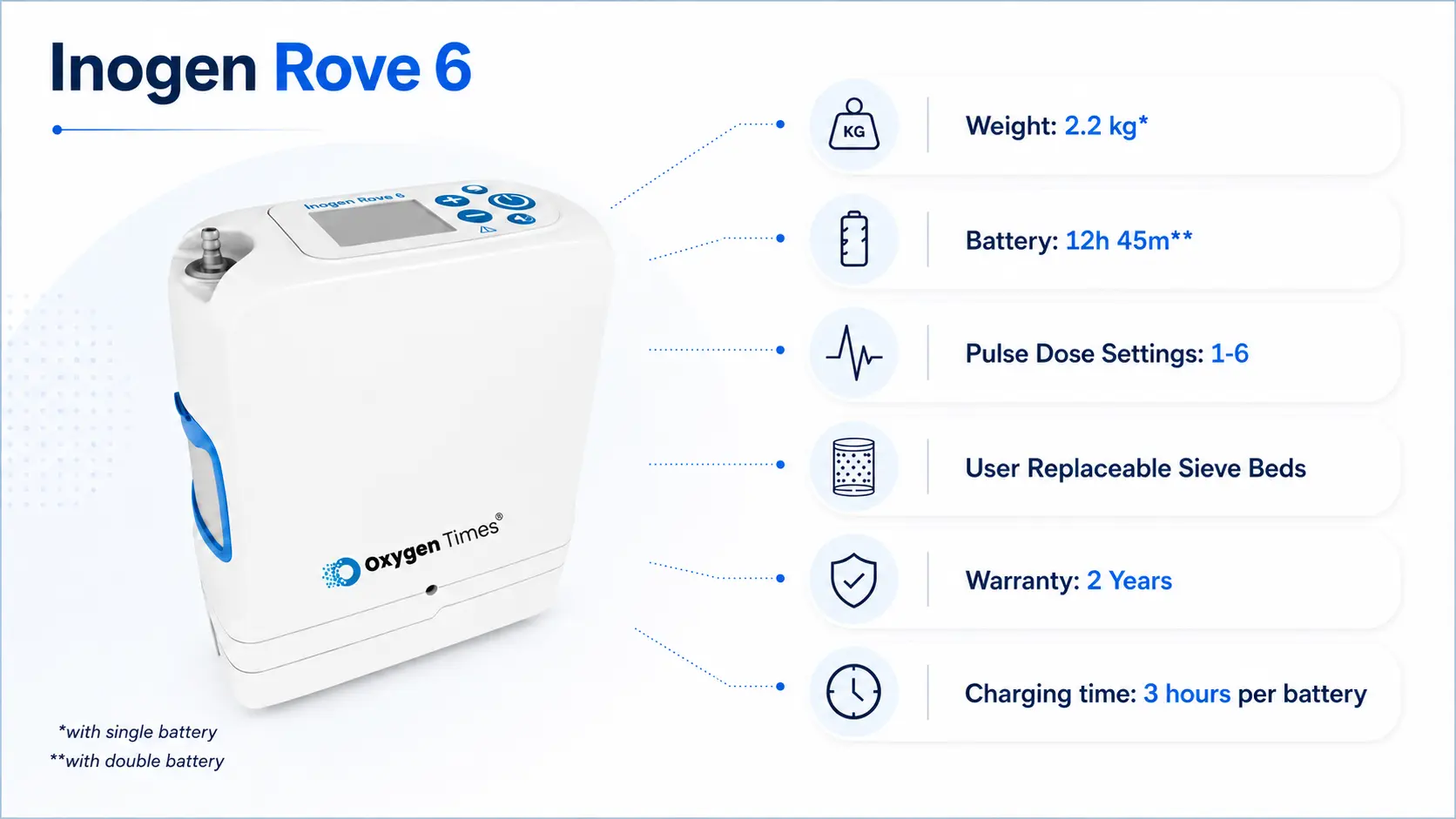
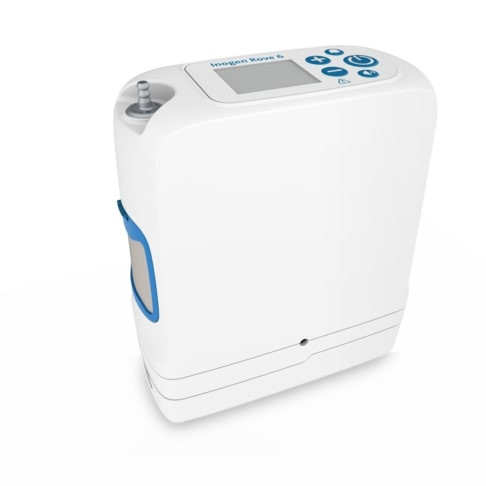
If you’re looking for a premium portable oxygen concentrator, there’s a good chance you’ll come across the Inogen Rove 6 during your search. It’s the latest model from Inogen and is based on the well-known Inogen One G5, which has been a popular choice for years.
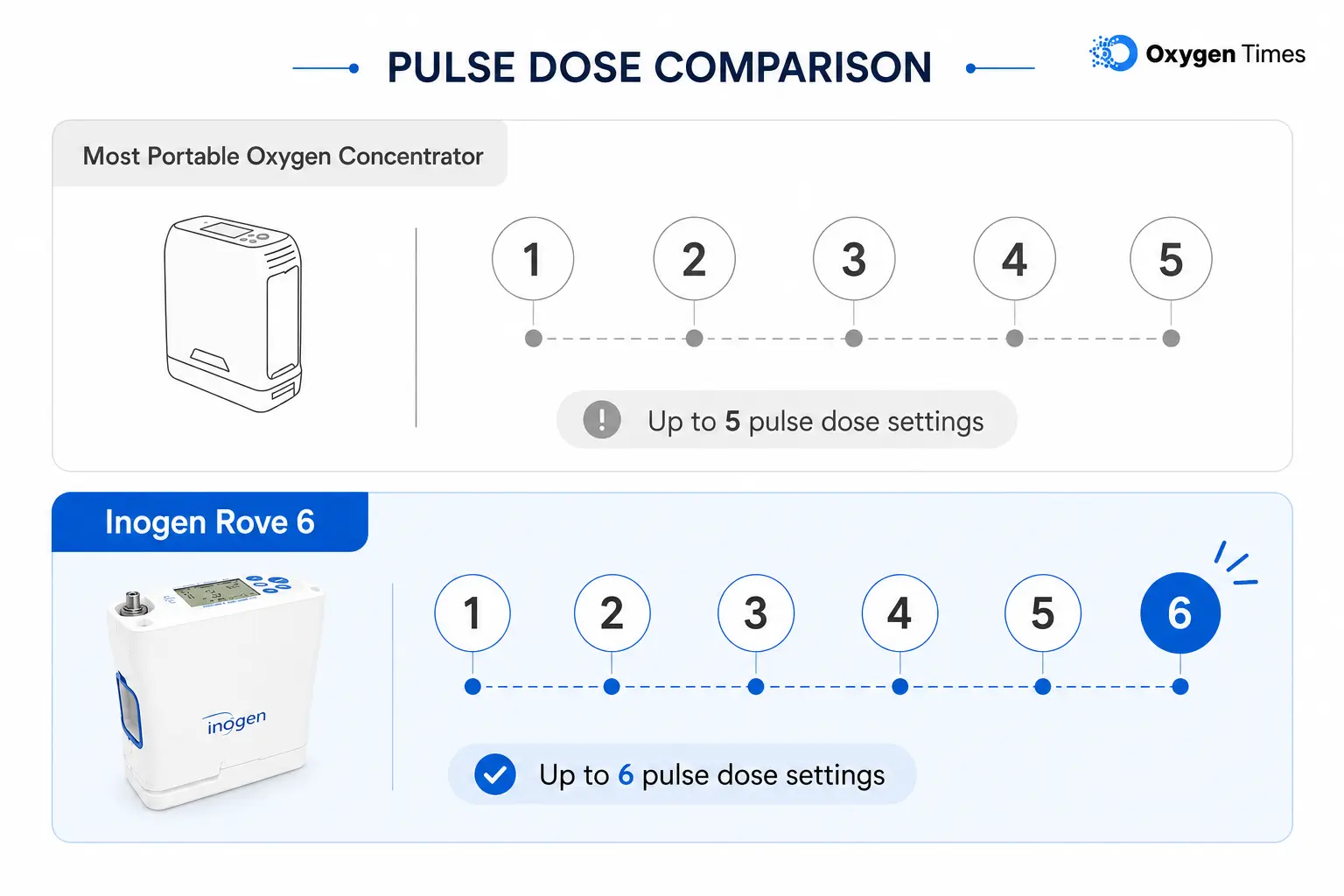
What makes the Rove 6 particularly impressive is its combination of size and oxygen output. While most portable oxygen concentrators offer up to five pulse dose settings, the Rove 6 provides six—all while weighing just over 2 kg. That’s a combination very few portable oxygen concentrators can match, making it a great option for users who need higher oxygen settings without having to carry a heavier machine.
What Makes It Different?
What makes the Inogen Rove 6 different isn't just its higher oxygen delivery capability—it's the way that capability is paired with user-replaceable sieve beds. Very few lightweight portable oxygen concentrators offer both features together. For users who qualify for this level of oxygen support, it means greater flexibility without making long-term maintenance unnecessarily complicated.
Key specifications
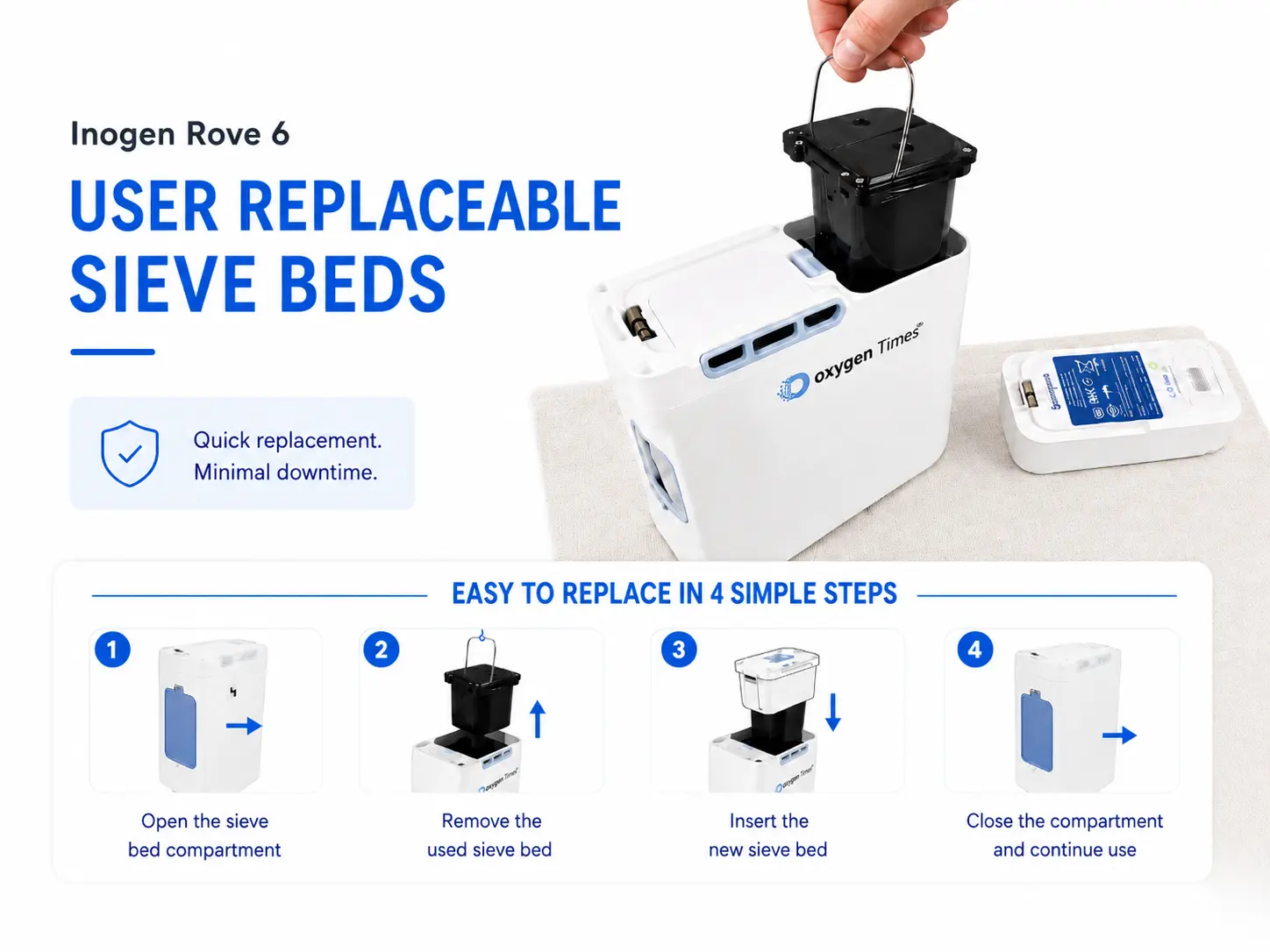
- Pulse Dose Settings: 1-6
- Weight: 2.2 kg
- Battery Backup: Up to 12 Hours 45 Minutes
- User Replaceable Sieve Beds: Yes
- Airline Approved: Yes
- Warranty: 2 Years
Pros
- Highest oxygen delivery capability among lightweight portable oxygen concentrators
- Excellent battery backup
- User-replaceable sieve beds
- Premium design and quiet operation
- Excellent brand reputation worldwide
Cons
- Premium pricing
- Plastic sieve bed housing
- Battery replacement cost can exceed ₹55,000
- Limited service presence compared to some Indian-focused brands
Expert Verdict
In our experience assisting thousands of oxygen therapy patients across India, one thing we've consistently noticed is how often users appreciate the Inogen Rove 6 for its quiet operation, premium build quality, higher oxygen output, and ease of maintenance.
If budget isn't the deciding factor, the Inogen Rove 6 continues to be widely regarded as the strongest premium portable oxygen concentrator you can buy today. That said, many Indian buyers don't necessarily need six pulse dose settings. If five settings are sufficient for their prescription, other reliable models deliver excellent performance while offering better overall value at a considerably lower price.
2. Oxysure Go
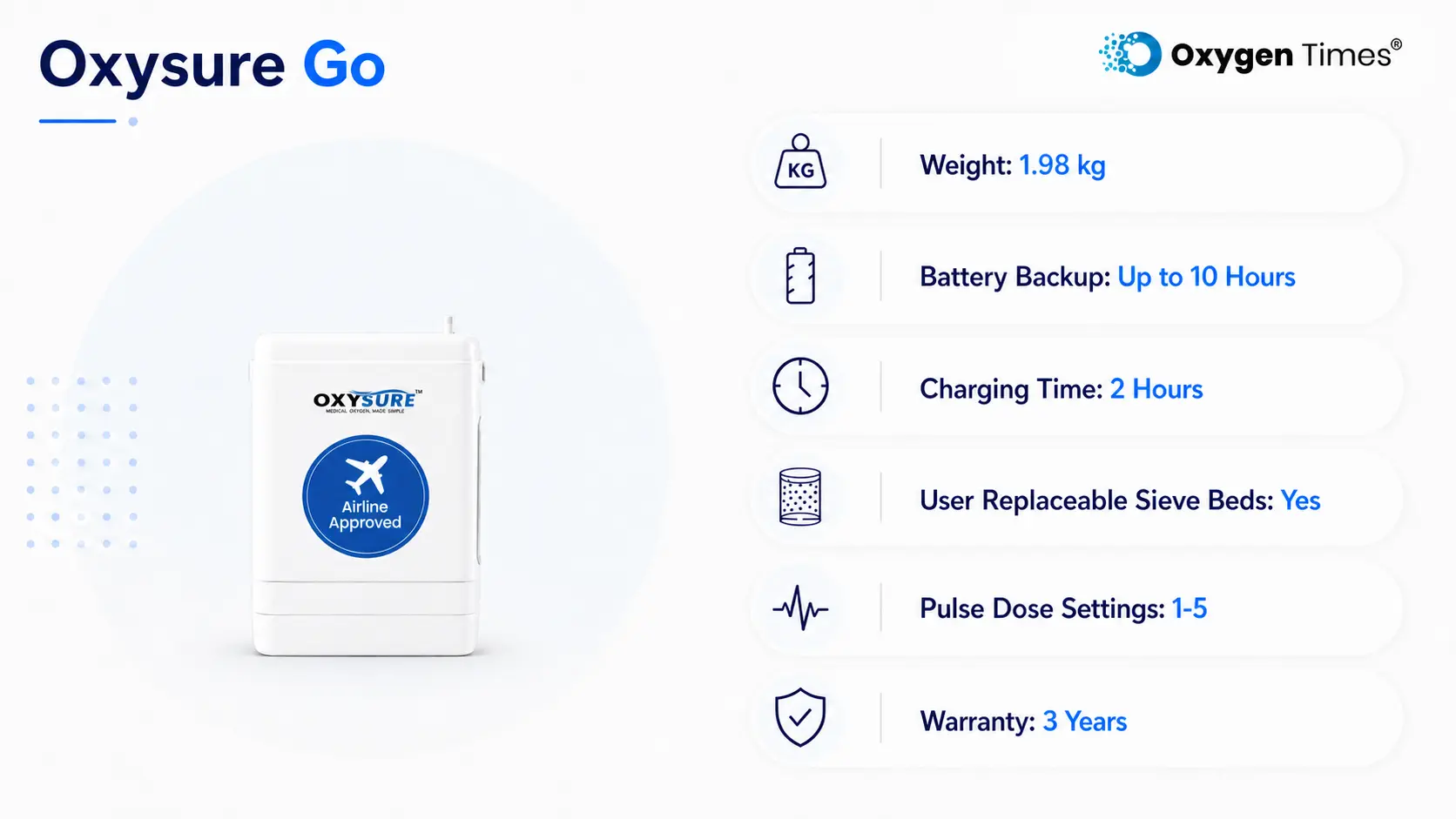
For many buyers, finding a portable oxygen concentrator below ₹2 lakh usually means compromising on one feature or another. The Oxysure Go is among the few models that manage to avoid many of those trade-offs, offering a combination of features that are typically seen in more expensive devices.
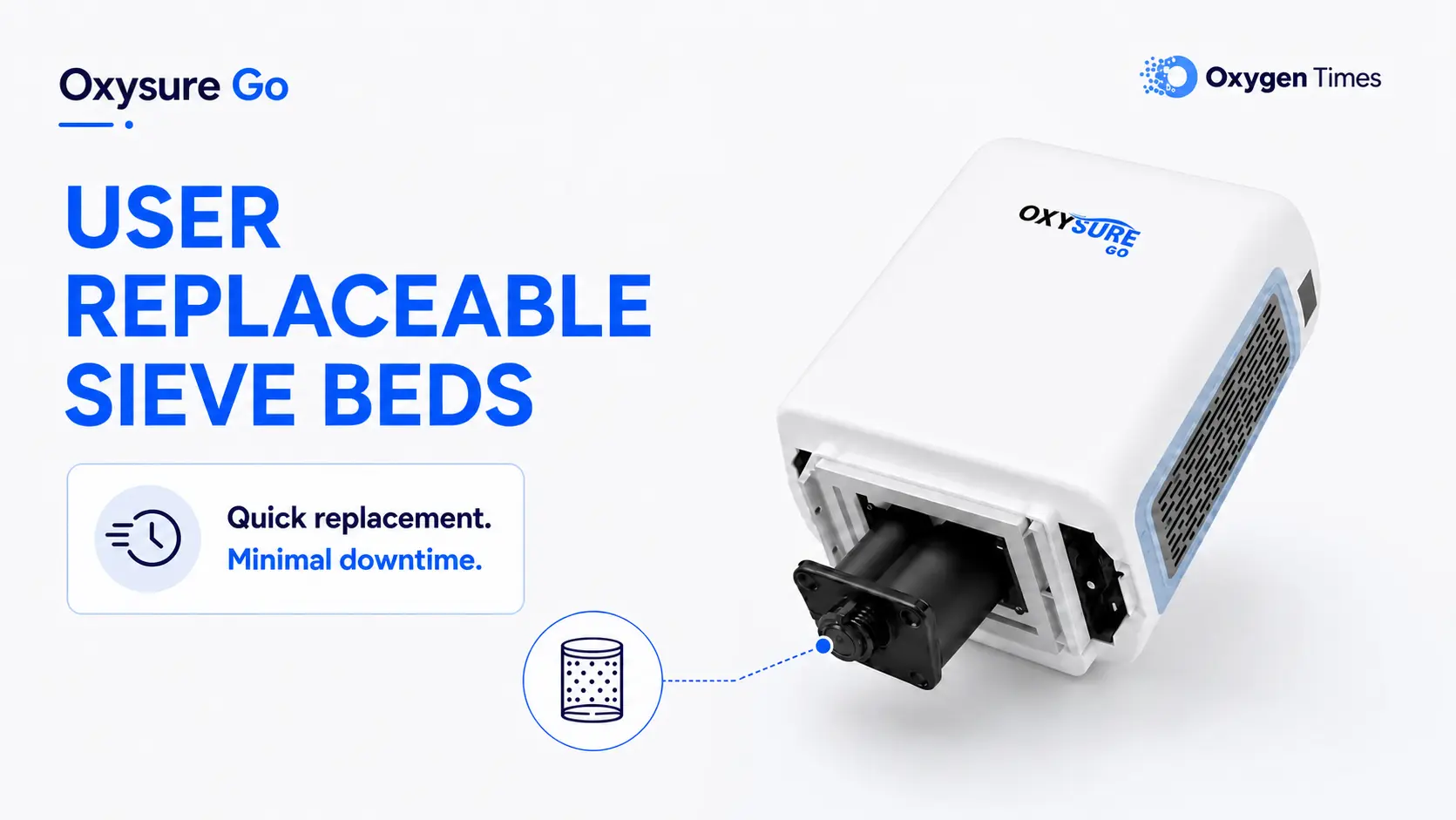
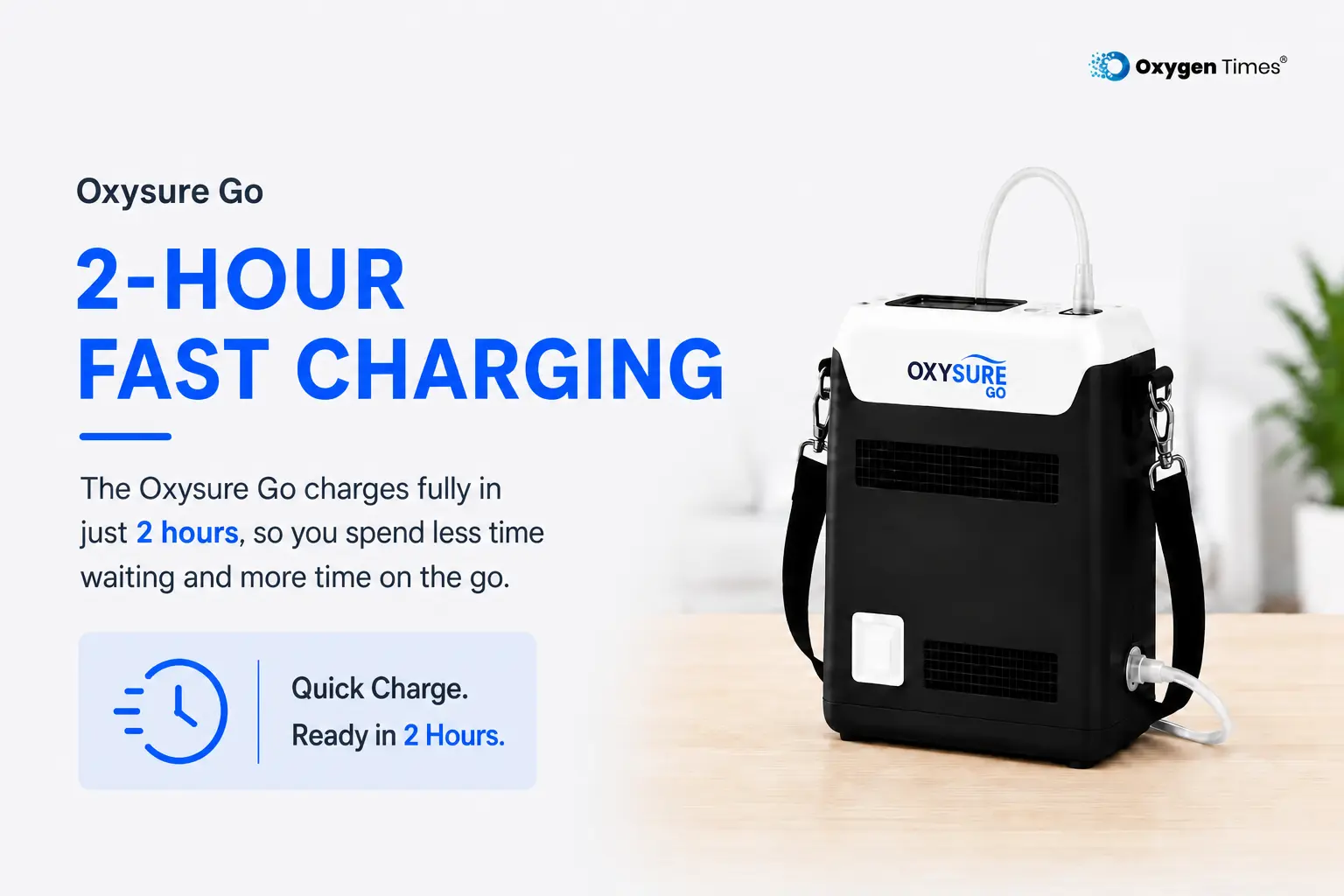
A major advantage of the Oxysure Go is its charging time of around 2 hours per battery, making it India's fastest-charging portable oxygen concentrator. It is currently the only portable oxygen concentrator under ₹2 lakh with user-replaceable sieve beds, a feature that makes long-term maintenance simpler and more economical.
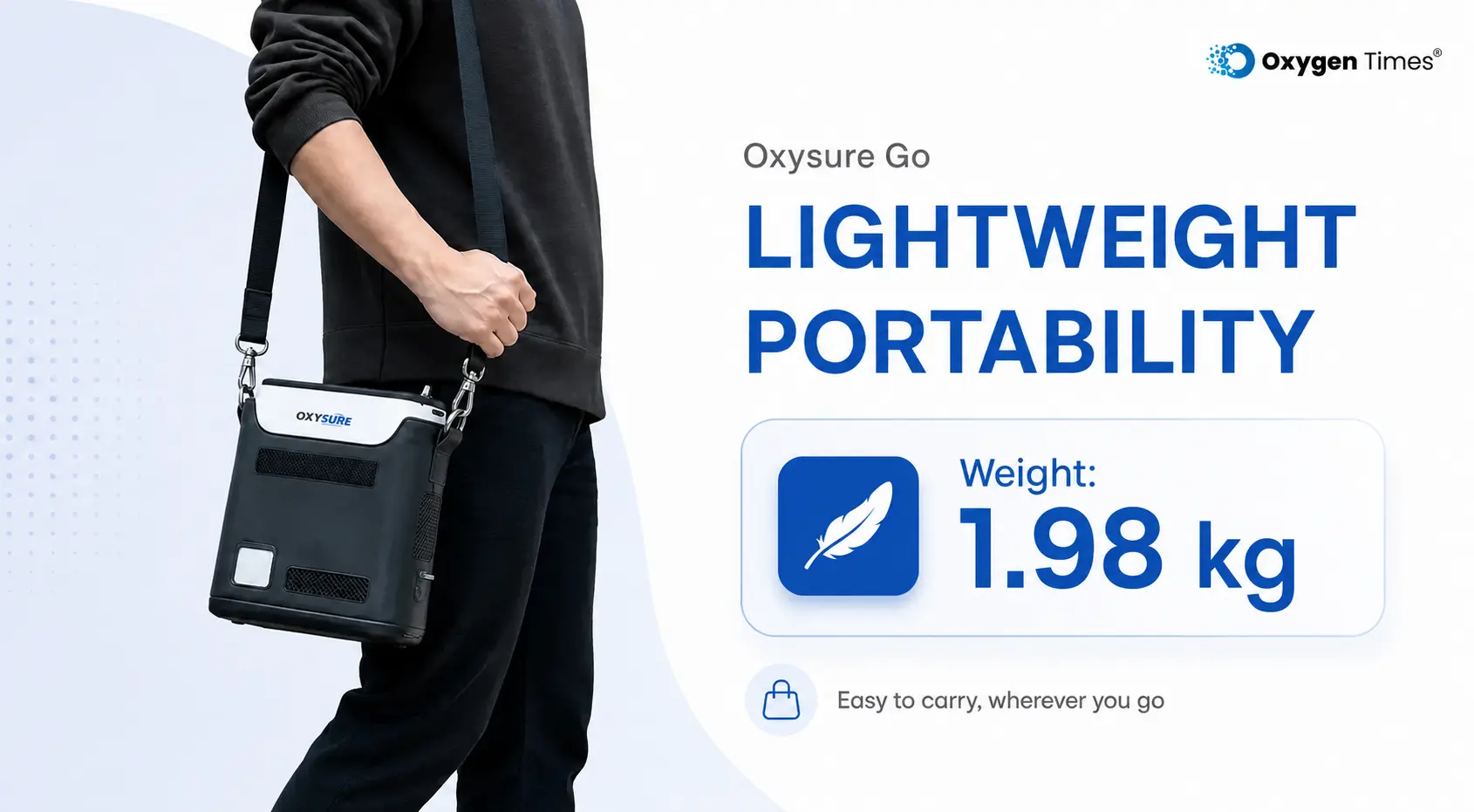
Specifications tell only part of the story. Over the years, the Oxysure Go has also built a strong reputation among oxygen therapy users because of its airline approval, lightweight design, and widespread service network across India. Over time, we've also received consistently positive feedback from patients who wanted a dependable portable oxygen concentrator that is equally comfortable for travel and everyday use.
What Makes It Different?
What makes the Oxysure Go different is the combination of features rather than any single specification. Bringing together fast charging, user-replaceable sieve beds, and lightweight portability in this price segment is still uncommon. For users who depend on oxygen therapy every day, that combination can mean less downtime, simpler maintenance, and greater convenience over the long term.
Key specifications
- Pulse Dose Settings: 1-5
- Weight: 1.98 kg
- Battery Backup: Up to 10 Hours
- Charging Time: 2 Hours
- User Replaceable Sieve Beds: Yes
- Warranty: 3 Years
- Airline Approved: Yes
- Service Locations: 35+ Across India
Pros
- User-replaceable sieve beds
- Ultra-fast charging
- Excellent patient feedback
- Trusted by thousands of oxygen therapy users
- Widespread service network across India
- Lower ownership cost
- Lightweight 1.98 kg design
- Affordable battery replacement cost
- Indian-origin brand with company-operated service support
Cons
- Limited to 5 pulse settings
- Plastic sieve bed housing
Expert Verdict
If someone asked us to recommend one portable oxygen concentrator that offers the best overall balance for most Indian buyers, the Oxysure Go would be among our first recommendations. It brings together lightweight portability, fast charging, easy maintenance, and lower long-term ownership costs without asking buyers to compromise on the features that matter most.
Based on the patient feedback we've received over the years, the Oxysure Go has earned a strong reputation for its reliability, after-sales support, and ease of ownership. Many users who travel frequently also appreciate how lightweight and straightforward it is to maintain for everyday oxygen therapy.
3. Oxymed P2
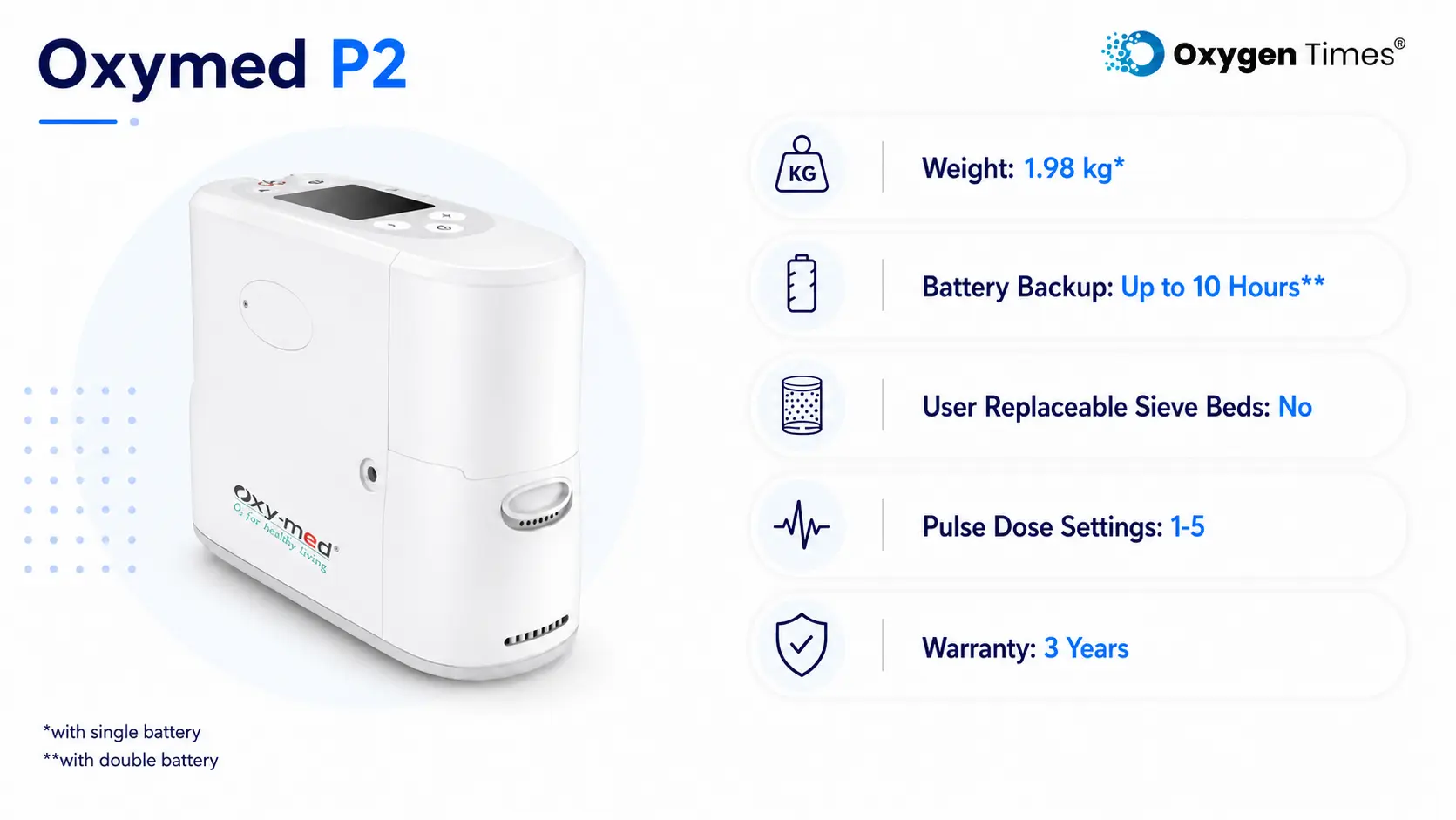
When the Oxymed P2 entered the Indian market, it quickly became among India's earliest affordable airline-approved portable oxygen concentrators that many buyers could realistically consider. At a time when most portable oxygen concentrators were still positioned at a much higher price point, the P2 helped make portable oxygen therapy more accessible to a wider section of Indian users.
Even today, it continues to be one of the most widely sold portable oxygen concentrators in India, not just because of its affordability, but also because of its extensive service presence across the country. For buyers planning to use a portable oxygen concentrator for years rather than months, having dependable after-sales support can be just as important as the device itself.
What Makes It Different?
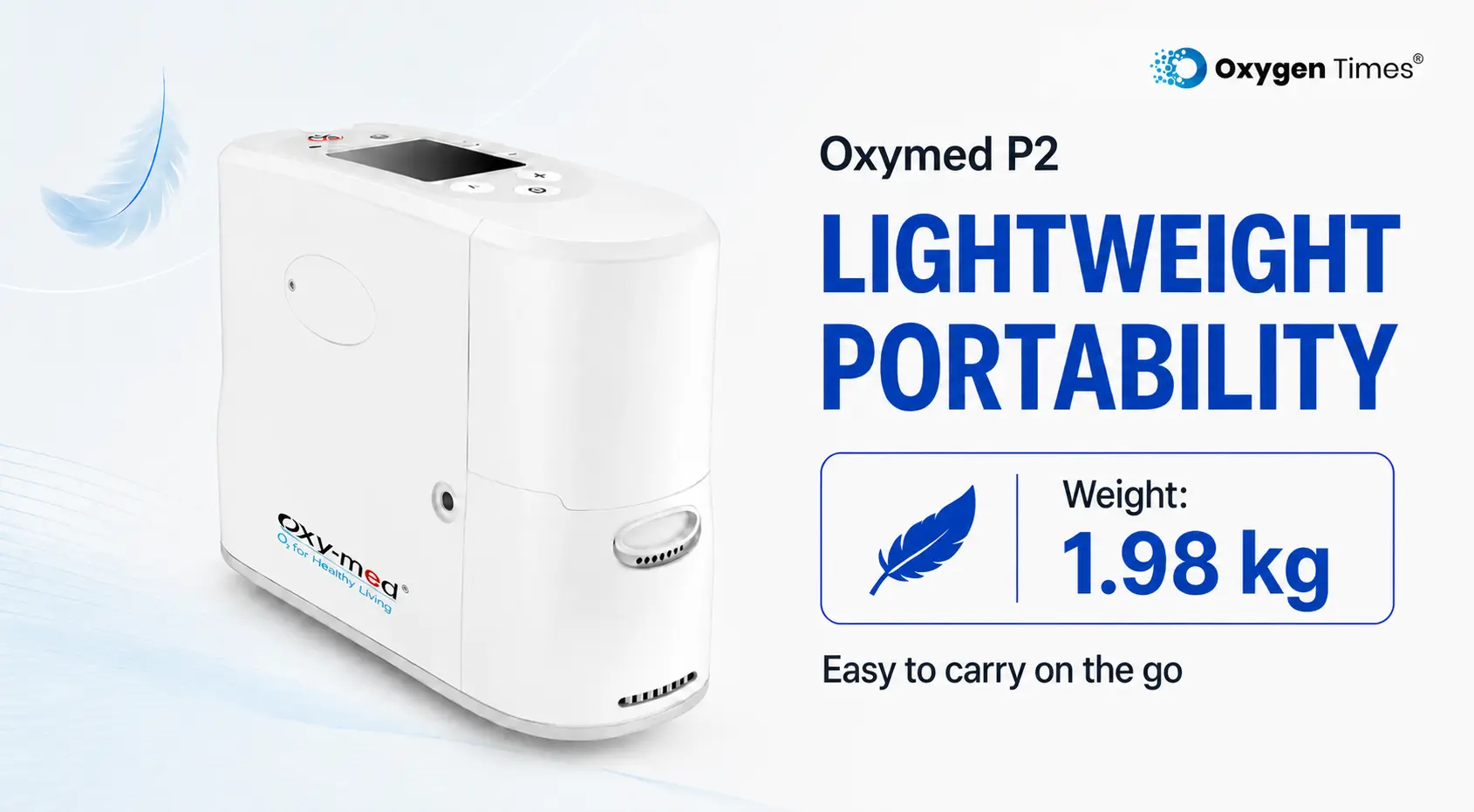
The biggest reason the Oxymed P2 has remained popular isn't any single feature. It's the overall ownership experience. It combines a lightweight 1.98 kg design, up to 10 hours of battery backup, and wide user adoption across India, making it a practical option for people who value portability without giving up long-term support.
For buyers looking beyond the initial purchase, the combination of dependable performance and service-backed long-term ownership still makes the Oxymed P2 an easy model to recommend.
Key specifications
- Pulse Dose Settings: 1-5
- Weight: 1.98 kg
- Battery Backup: Up to 10 Hours
- User Replaceable Sieve Beds: No
- Warranty: 3 Years
- Airline Approved: Yes
Pros
- Widespread service network across India
- Lower ownership costs
- Lightweight 1.98 kg design
- Affordable battery replacement cost
- Indian-origin brand with company-operated service support
Cons
- Limited to 5 pulse settings
- Plastic sieve bed housing
- Approximately 4-hour charging time
- No user-replaceable sieve beds
Expert Verdict
From our experience helping oxygen therapy users choose portable oxygen concentrators, one of the biggest reasons the Oxymed P2 remains popular is that buyers know they can rely on its wide service network long after the purchase. Combined with its lightweight design, dependable performance, and value-focused pricing, it remains a practical choice, especially for first-time buyers.
4. Philips Respironics SimplyGo Mini
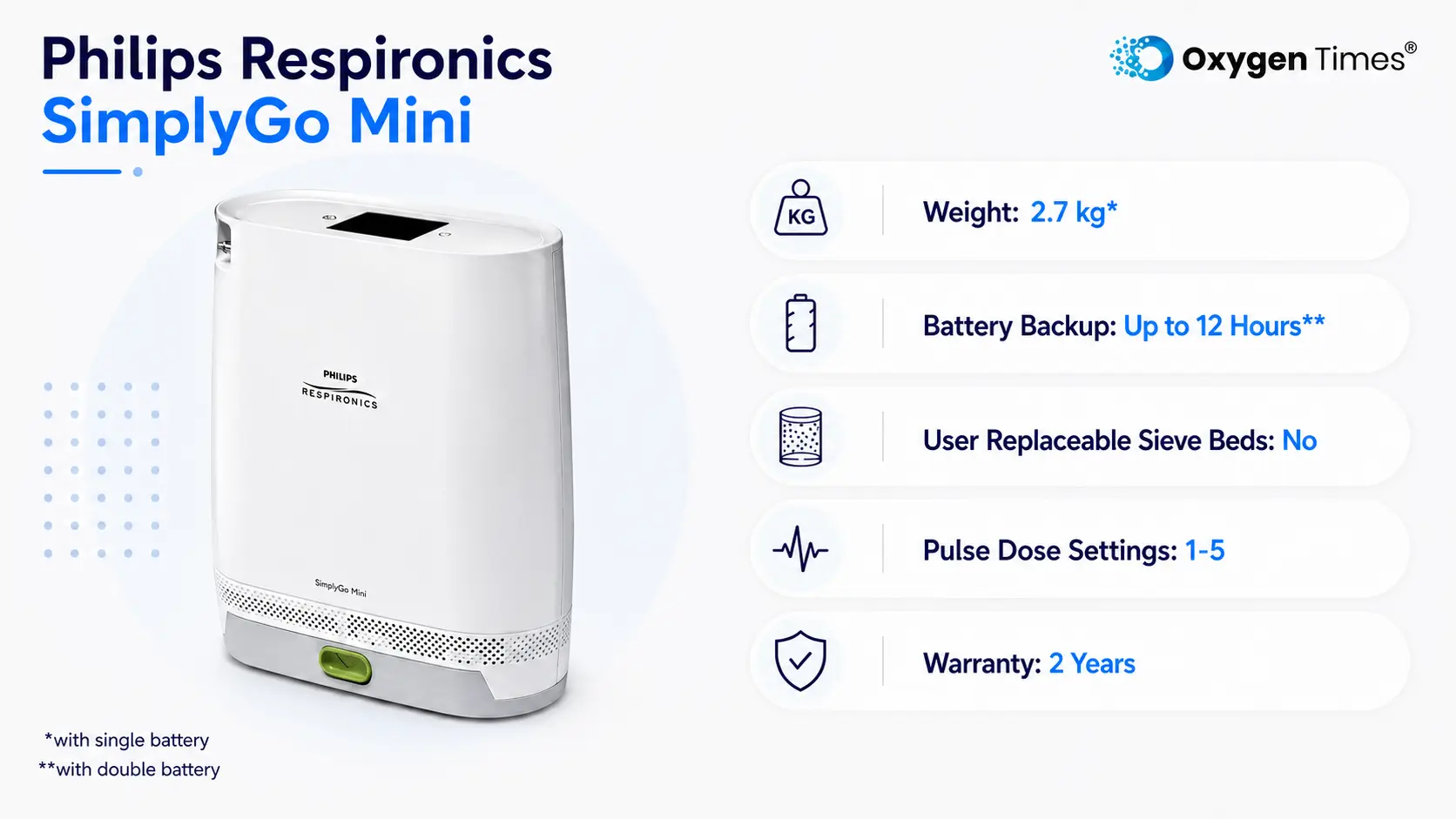
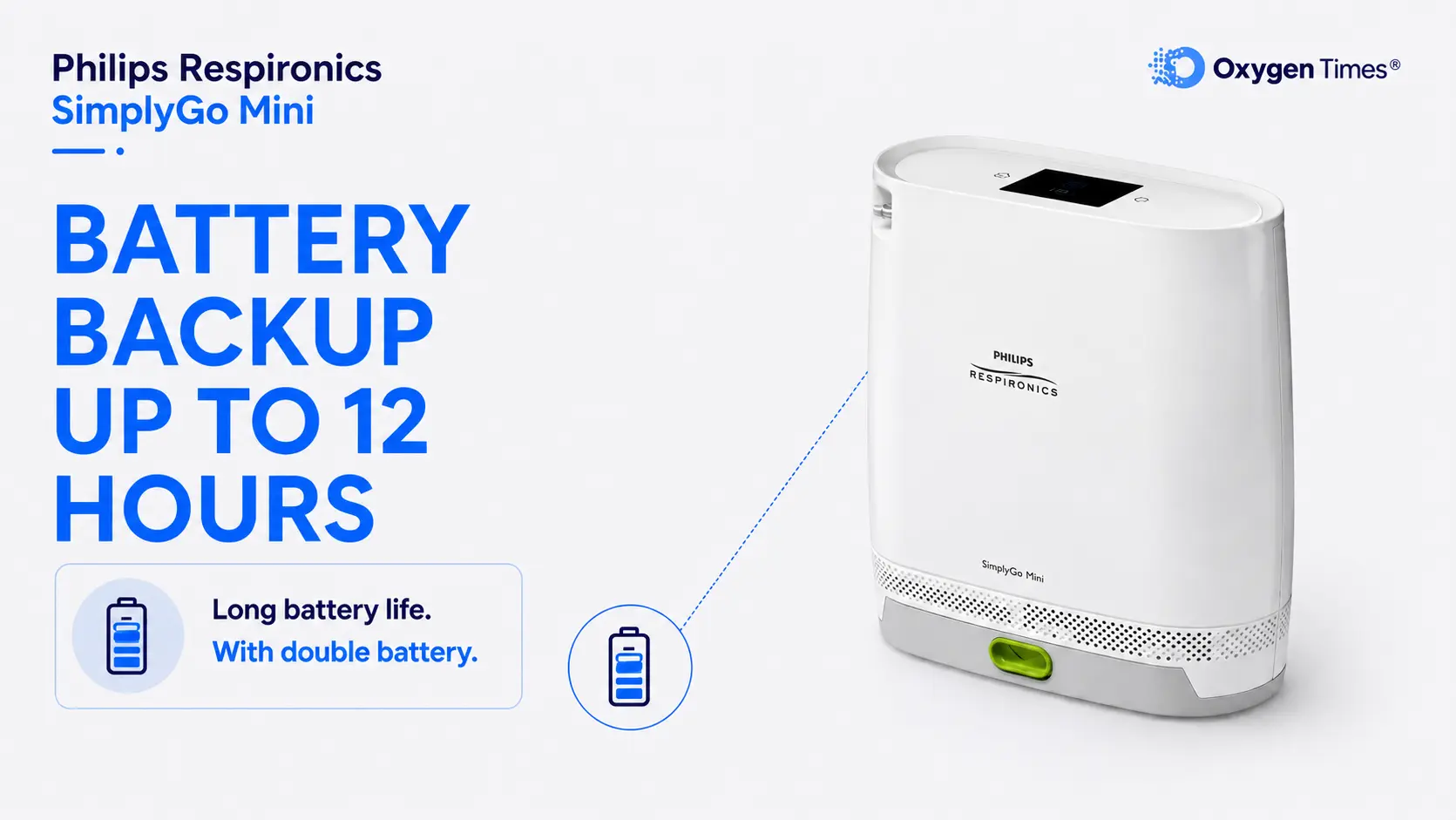
For many buyers, the Philips name itself is often a deciding factor when choosing respiratory care equipment. The SimplyGo Mini benefits from the long-standing reputation of Philips Respironics, one of the most recognized brands in respiratory care worldwide.
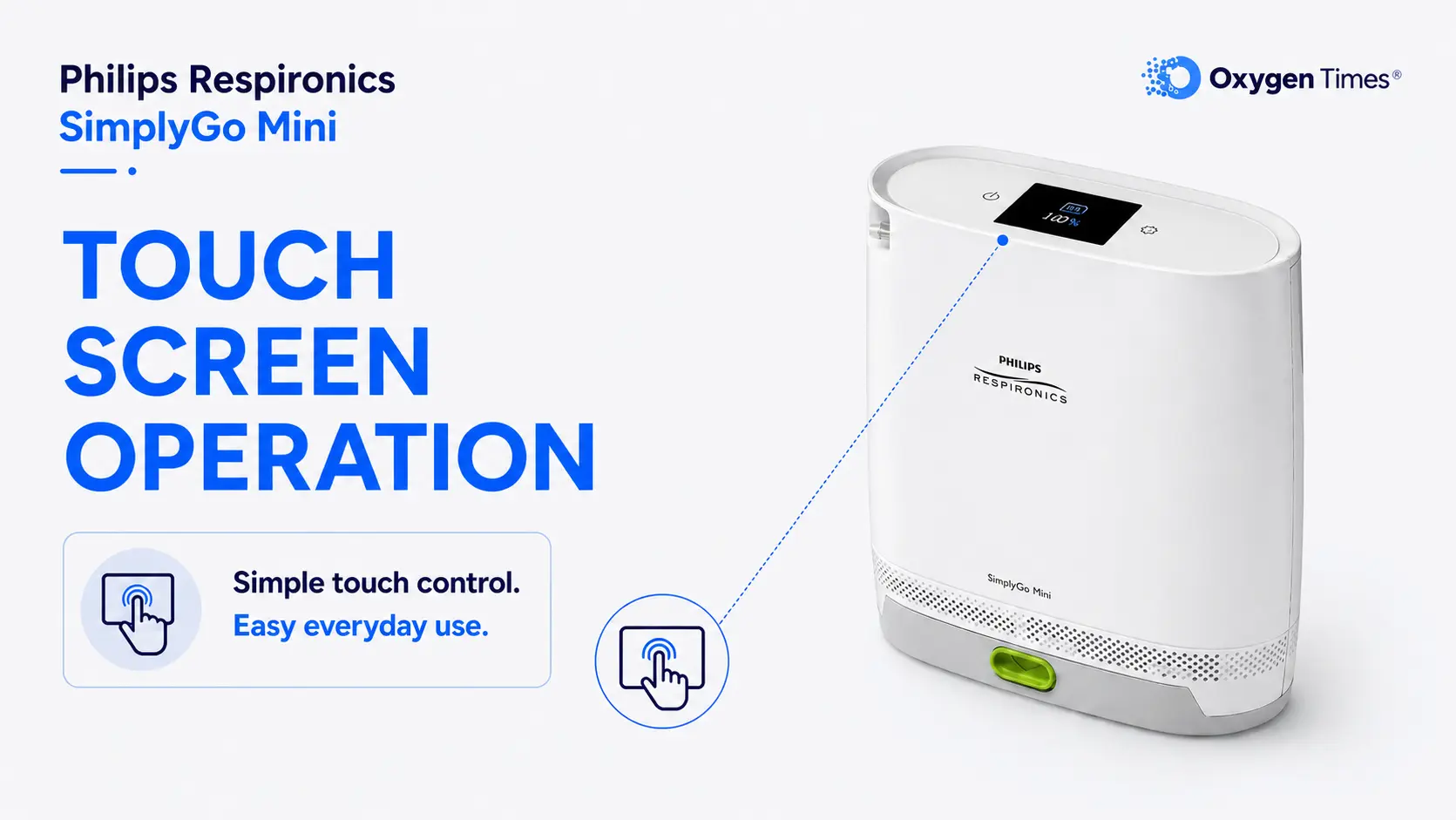
Beyond its brand recognition, the device offers touch-screen operation, dependable oxygen delivery, and premium build quality. At approximately 2.7 kg, however, it is also one of the heaviest portable oxygen concentrators in this comparison, which is worth considering if portability is a top priority.
What Makes It Different?
For many users, the biggest attraction of the Philips SimplyGo Mini is the trust associated with the Philips name. At Oxygen Times, we have often seen patients specifically asking for Philips, as many users feel more confident about its quality, reliability, and long-standing reputation in respiratory care.
Key specifications
- Pulse Dose Settings: 1-5
- Weight: 2.7 kg
- Battery Backup: Up to 12 Hours
- Warranty: 2 Years
- Airline Approved: Yes
Pros
- Trusted global respiratory care brand
- Excellent brand recognition in India
- Premium build quality
- Touch screen operation
- Up to 12 hours battery backup
- Strong international reputation
Cons
- Heavier than most competitors
- Higher ownership costs
- No user-replaceable sieve beds
- Approximately 4-hour charging time per battery
- Discontinued in several international markets
Important update regarding Philips SimplyGo Mini
According to notifications issued by Philips Respironics, the SimplyGo Mini was officially discontinued for the US market on January 25, 2024, with end-of-service support continuing until January 25, 2029.
Although this announcement specifically applies to the US market, we've also observed periodic availability challenges and inventory shortages in India over the past few years. For that reason, prospective buyers should confirm current product availability, spare parts support, battery availability, and future service support before making a purchase decision.
Expert Verdict
At Oxygen Times, we've met many buyers who begin their search with Philips simply because it's a brand they've trusted for years. The SimplyGo Mini continues to be a dependable portable oxygen concentrator backed by one of the world's most respected respiratory care brands, and many users appreciate its touch-screen interface, premium build quality, and the confidence that comes with a globally recognized name.
That said, the portable oxygen concentrator market has evolved considerably in recent years. For buyers comparing the latest options available in India, several newer models now offer faster charging, lighter weight, easier servicing, and lower long-term ownership costs, making them a more practical choice for many users.
5. DeVilbiss iGo2
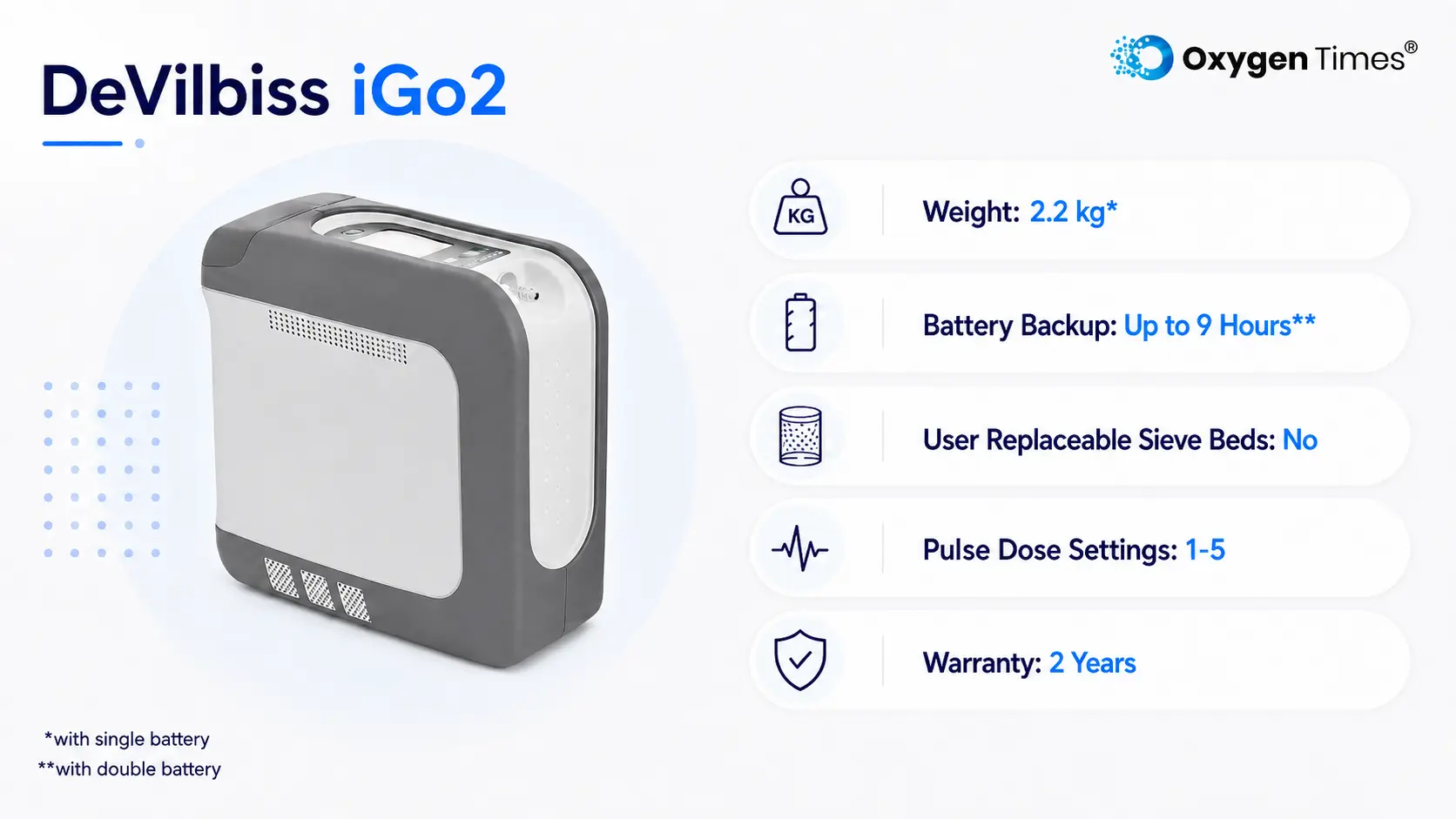
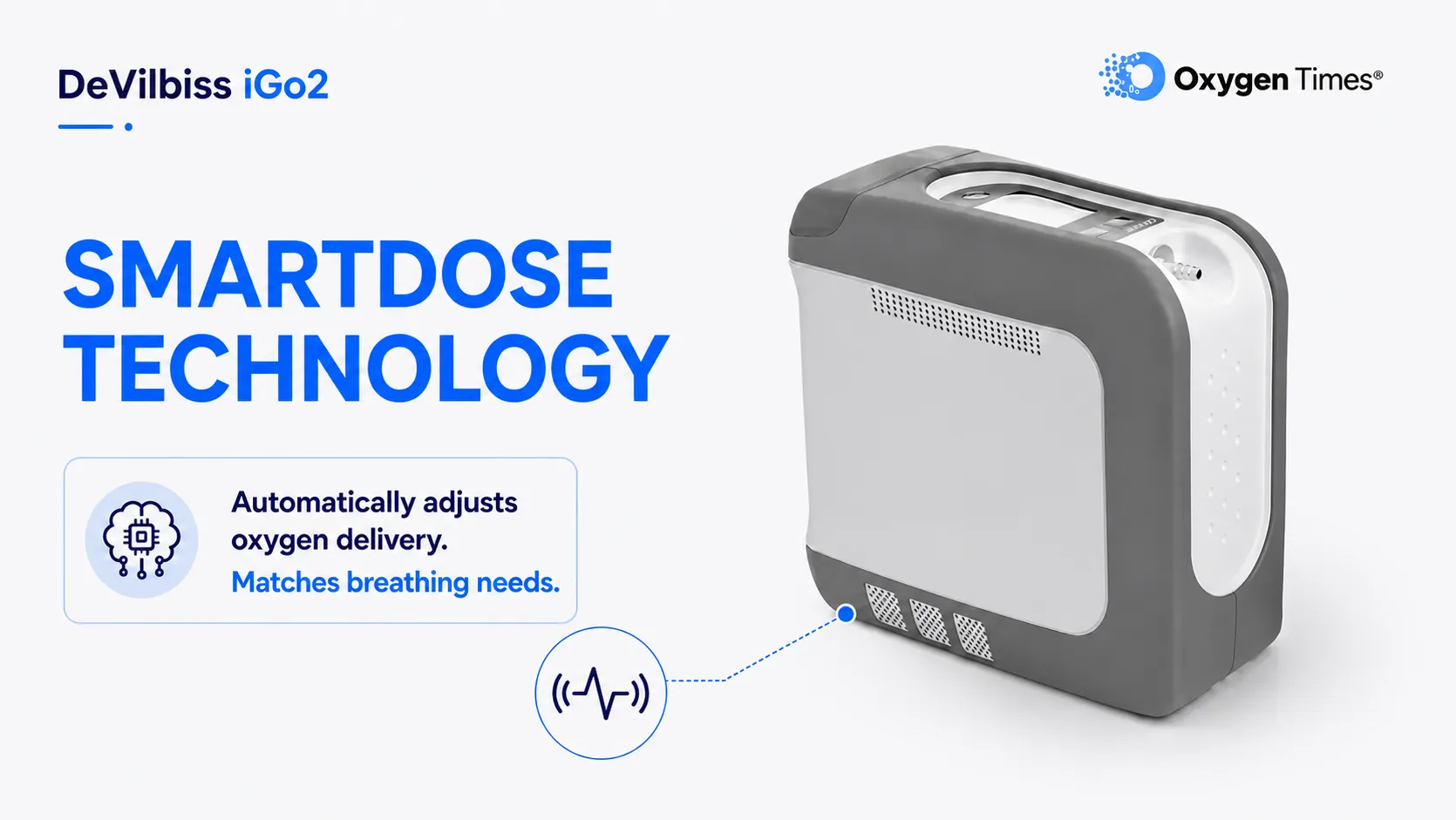
Among the portable oxygen concentrators available today, the DeVilbiss iGo2 is best known for its SmartDose Technology, a feature designed to automatically adjust oxygen delivery based on the user's breathing pattern. Instead of delivering a fixed pulse every time, the device responds to changes in breathing, with the goal of providing a more comfortable oxygen therapy experience during different activity levels.
Along with pulse dose settings from 1 to 5, the DeVilbiss iGo2 is also airline approved, making it a practical option for users who travel with oxygen therapy.
Key specifications
- Pulse Dose Settings: 1-5
- Weight: 2.2 kg
- Battery Backup: Up to 9 Hours
- Warranty: 2 Years
- Airline Approved: Yes
Pros
- SmartDose automatic oxygen adjustment
- Reliable oxygen delivery
- Good build quality
- Trusted international brand
- Airline approved
Cons
- Lowest battery backup among devices in this comparison
- No user-replaceable sieve beds
- Approximately 5-hour charging time
- Limited advantage of SmartDose for many users in real-world usage
Expert Verdict
From our experience, buyers who enquire about the DeVilbiss iGo2 are usually interested in its SmartDose Technology rather than just its specifications. It's a well-built portable oxygen concentrator from a trusted global brand, and there's little doubt about its overall quality and reliability.
That said, technology has moved forward over the past few years. For many Indian buyers, battery backup, charging time, and long-term ownership costs often have a greater impact on the overall experience. In these areas, several newer portable oxygen concentrators now offer a stronger balance of convenience and value.
Which portable oxygen concentrator should you buy?
If budget is not a constraint and you want the highest oxygen output in a lightweight portable oxygen concentrator, choose the Inogen Rove 6. It offers up to 6 pulse dose settings and is a premium, airline-approved option for users with higher oxygen requirements.
For most Indian buyers looking for an affordable, lightweight, airline-approved portable oxygen concentrator, both Oxysure Go and Oxymed P2 are fantastic choices. Both models offer strong pan-India service support, good portability, and dependable performance for travel and everyday oxygen therapy use.
If you are unsure which model fits your oxygen prescription, travel needs, or budget, contact our oxygen therapy experts by clicking the WhatsApp or Call button below.
FAQs
Which is the best portable oxygen concentrator in India?
There is no single best portable oxygen concentrator for everyone. The right choice depends on your oxygen prescription, daily routine, and budget. If you need higher oxygen output, the Inogen Rove 6 is the strongest premium option in this comparison, offering up to 6 pulse dose settings. For most Indian buyers, the Oxysure Go and Oxymed P2 offer a better balance of portability, affordability, after-sales support, and long-term ownership value.
Which portable oxygen concentrator is best for most Indian buyers?
For most Indian buyers, the Oxysure Go offers the best overall balance of features, service support, and long-term ownership value. It combines a 1.98 kg lightweight design, 2-hour charging, user-replaceable sieve beds, and a strong pan-India service network. For users who want a device that is easy to carry, simple to maintain, and suitable for everyday oxygen therapy, it is a practical choice.
Which portable oxygen concentrator has the best battery backup?
The Inogen Rove 6 offers the longest battery backup in this comparison, providing up to 12 hours and 45 minutes with a double battery configuration. The Philips SimplyGo Mini offers up to 12 hours, while the Oxysure Go and Oxymed P2 provide up to 10 hours. Battery backup matters, but charging speed, replacement battery cost, and long-term ownership expenses should also be considered.
Which portable oxygen concentrator is best for travel?
A good travel portable oxygen concentrator should be lightweight, airline-approved, quick to recharge, and supported by dependable battery backup. The Oxysure Go is a practical travel option because it weighs 1.98 kg, charges in around 2 hours, and offers up to 10 hours of battery backup. Its service network across India is another advantage for frequent travellers.
Can I take a portable oxygen concentrator on a flight?
Yes, many portable oxygen concentrators are approved for air travel, but you should always confirm the airline's latest requirements before flying. Airlines may have different rules for approved models, battery capacity, and spare batteries. The Inogen Rove 6, Oxysure Go, Oxymed P2, Philips SimplyGo Mini, and DeVilbiss iGo2 are airline-approved models covered in this guide.
What is the difference between pulse dose and continuous flow?
A pulse dose oxygen concentrator delivers oxygen when it detects inhalation, while a continuous flow oxygen concentrator supplies oxygen at a constant rate. Most lightweight portable oxygen concentrators use pulse dose technology because it helps reduce size and conserve battery power. If you need oxygen while sleeping or have been prescribed continuous oxygen therapy, follow your doctor's recommendation before choosing between the two.
Can a portable oxygen concentrator be used while sleeping?
Some patients can use a portable oxygen concentrator during sleep, but not every pulse dose machine is suitable for overnight use. These devices depend on detecting breathing before delivering oxygen. If you have been prescribed night-time oxygen, confirm with your doctor whether a pulse dose or continuous flow oxygen concentrator is appropriate for you.
Which portable oxygen concentrator has the lowest maintenance?
The Oxysure Go and Oxymed P2 are practical, low-maintenance options in India because both have affordable spare parts and strong parts availability. The Oxysure Go has an additional advantage with its user-replaceable sieve beds, which can reduce service centre visits and potentially save users up to ₹15,000 over the long term.
Which portable oxygen concentrator charges the fastest?
The Oxysure Go is the fastest-charging model in this comparison, taking around 2 hours per battery. This can be especially useful for people who travel frequently or need to recharge the device quickly during the day. In regular use, faster charging can be just as important as longer battery backup because it reduces downtime.
Which portable oxygen concentrator is best for elderly patients?
For elderly users, the best portable oxygen concentrator should be lightweight, easy to operate, simple to maintain, and backed by reliable after-sales support. The Oxysure Go and Oxymed P2 are practical options because they balance portability, battery backup, service support, and long-term ownership convenience.
Which portable oxygen concentrator is best for COPD patients?
There is no single portable oxygen concentrator that is best for every COPD patient. The right choice depends on the prescribed oxygen requirement, activity level, usage pattern, and target SpO₂ levels. Models such as the Inogen Rove 6, Oxysure Go, Oxymed P2, Philips SimplyGo Mini, and DeVilbiss iGo2 may suit different users, but the final decision should follow the doctor's prescription and the patient's SpO₂ response.
How long do sieve beds last in a portable oxygen concentrator?
The lifespan of sieve beds depends on usage, operating conditions, humidity, and maintenance. In most cases, they last around 3,000 to 5,000 hours before gradually losing efficiency and requiring replacement. Models with user-replaceable sieve beds, such as the Inogen Rove 6 and Oxysure Go, make replacement easier and can reduce the need for repeated service centre visits.
Is battery backup more important than charging speed?
Both are important, but the priority depends on how you use the device. Battery backup determines how long the portable oxygen concentrator can operate away from a power source, while charging speed determines how quickly it is ready to use again. Frequent travellers often benefit from faster charging because it reduces downtime between uses.
How do I choose between Inogen Rove 6, Oxysure Go, and Oxymed P2?
Your choice should depend on your oxygen prescription, budget, and long-term ownership priorities. The Oxysure Go offers excellent overall value with 2-hour charging, user-replaceable sieve beds, and a strong pan-India service network. The Inogen Rove 6 is the premium option for users who need up to 6 pulse dose settings and higher oxygen output. The Oxymed P2 remains a reliable, lightweight, and airline-approved option with dependable after-sales support.
Should I buy the cheapest portable oxygen concentrator?
Not always. A lower purchase price does not necessarily mean a lower long-term ownership cost. Before buying, compare oxygen settings, battery backup, charging time, battery replacement cost, sieve bed quality, after-sales service, and whether the device matches your prescribed oxygen requirement. Buying from a brand with reliable service support is equally important, as poor-quality spare parts or limited service availability can increase maintenance costs over time.
Do I need a doctor's prescription to buy a portable oxygen concentrator?
While a portable oxygen concentrator can often be purchased without a prescription in India, it should always be used according to a doctor's recommendation. The correct device depends on your prescribed oxygen requirement, target SpO₂ levels, and whether you need pulse dose or continuous flow oxygen therapy. Using a portable oxygen concentrator without proper medical advice may result in inadequate oxygen delivery.
Final Verdict
Choosing the right portable oxygen concentrator isn't just about comparing specifications on paper. After helping thousands of oxygen therapy users over the years, we've found that factors like service support, maintenance costs, and day-to-day usability often matter just as much as battery backup or oxygen settings.
For most Indian buyers, the Oxysure Go and Oxymed P2 continue to offer the strongest overall value. Both combine lightweight portability, airline approval, dependable performance, and a strong pan-India service network, making them practical choices for everyday oxygen therapy as well as travel.
Between the two, the Oxysure Go has a clear advantage in one important area—user-replaceable sieve beds. Until recently, this feature was typically associated with premium models like Inogen. Combined with its fast 2-hour charging, it helps reduce downtime and can also lower long-term maintenance costs, making it one of the strongest value-for-money portable oxygen concentrators available today.
The Oxymed P2, on the other hand, continues to be an excellent option for buyers who want a reliable, lightweight, and affordable portable oxygen concentrator backed by strong after-sales support and an established service network across India.
For buyers who want the highest oxygen output and are comfortable with the higher purchase and maintenance costs, the Inogen Rove 6 remains our premium recommendation. Its six pulse dose settings, premium build quality, and proven performance make it well-suited for users with higher oxygen requirements.
Ultimately, the best portable oxygen concentrator isn't necessarily the most expensive one—it's the one that matches your oxygen prescription, SpO₂ response, travel requirements, lifestyle, and long-term budget. If you're unsure which model is right for you, our oxygen therapy experts can help you compare the available options based on your individual needs.
Need help choosing the best Portable Oxygen Concentrator?
Our oxygen therapy experts are here to help you find the perfect match for your needs.
Need help choosing the best Portable Oxygen Concentrator?
Our oxygen therapy experts are here to help you find the perfect match for your needs.
